
Just as 2026 begins, you should note a surge of AI milestones: OpenAI’s ChatGPT Health beta links medical records and wellness apps to help you manage your care; NVIDIA unveiled Rubin GPUs, Vera CPUs and an “AI factory” plus an open reasoning vehicle model; Lenovo and Motorola launched Kira/QIRA cross-device AI; Lightrix released the open-weight LTX2 video model; Google brings Gemini to Gmail and TV; Meta updated smart glasses amid rollout delays and leadership controversy.
Key Developments in AI Technology
NVIDIA’s Rubin GPUs, Vera CPUs and new “AI factory” architecture are driving a leap in scalable compute, while open models like the vehicle reasoning stack let automakers skip building foundations from scratch; you also see Lightrix’s LTX2 release (open weights and training code) enabling fully local text-to-video on NVIDIA GPUs. Google and OpenAI integrations-ChatGPT Health (beta) and Gmail’s Gemini rollout-plus Lenovo/Motorola’s Kira cross-device assistant show hardware, software, and privacy-aware models converging for everyday users.
Breakthroughs in Machine Learning Algorithms
NVIDIA unveiled Rubin GPUs and Vera CPUs alongside architecture changes that improve model parallelism and throughput, and you can run Lightrix’s LTX2 locally thanks to open weights and training code, enabling low-latency text-to-video workflows on a single NVIDIA server. The open vehicle reasoning model reduces development time for OEMs, letting teams integrate advanced planning and perception modules without training base models from scratch, speeding deployment cycles measured in months rather than years.
Innovations in Natural Language Processing
ChatGPT Health (beta) links medical records and fitness apps so you can get contextual explanations of test results, prepare for visits, and manage routines, while Gmail’s Gemini features-AI summaries, generated replies and “help me write”-are rolling out to all users and already change inbox triage. Gemini on Google TV adds show summaries, photo search and voice-driven UI tweaks, giving you condensed content and hands-free control across screens.
You should weigh the integration trade-offs: Lenovo’s Kira/QIRA syncs assistant context across Motorola phones and Lenovo laptops using Microsoft and OpenAI stacks, a model that encourages staying within one vendor to preserve seamless prompts and history. Meta’s smart glasses added teleprompter mode and handwriting input but faced delayed international rollout from unexpectedly high demand, and public spats over LLaMA (Yann LeCun vs. Scale AI leadership) highlight governance and model stewardship issues you need to factor into procurement and trust decisions.
AI in Healthcare
You can now tap into connected health stacks that blend ChatGPT Health (beta) with device and EHR data to interpret lab results, prep for appointments, and keep routines on track; meanwhile, NVIDIA’s Rubin GPUs, Vera CPUs and “AI factory” architecture are being positioned to give hospitals the compute backbone to deploy these models at scale while vendors like Lenovo aim to sync insights across your phone and laptop for seamless care continuity.
Integration of AI in Diagnostic Tools
You’ll see diagnostics evolve as imaging and pathology models move from research to practice, with ChatGPT Health helping you contextualize test outcomes and Rubin-powered servers enabling near-real-time inference for radiology triage; hospitals adopting on-prem inferencing reduce data egress, improving privacy and turnaround, and vendors are piloting workflows that flag urgent findings directly to clinicians’ devices.
Personalized Treatment Plans with AI
You can get AI-generated, personalized care suggestions that combine your medical records, fitness apps and wellness data via ChatGPT Health (beta), so treatment plans reflect medication history, recent activity and lab trends; Lenovo’s cross-device assistant (Kira/QIRA) further ensures those recommendations follow you across phone and laptop for consistent adherence support.
You’ll notice more granular personalization as systems synthesize longitudinal data: for example, if your labs show rising A1c and your glucose logs indicate nighttime spikes, the AI can suggest tailored medication timing, activity changes and specific questions to bring to your clinician, while Rubin/Vera-backed deployments let providers run these models locally to preserve privacy and accelerate clinician review.
AI and Ethics
Addressing Bias in AI Systems
When you rely on models like ChatGPT Health to interpret medical records, biased training data can produce unequal outcomes: studies show underdiagnosis rates rise when EHRs underrepresent minority groups. You should insist on dataset provenance, routine bias audits, and counterfactual testing; open-weight releases such as Lightrix LTX2 let you run local evaluations and fine-tune models on representative samples, while cross-device assistants (Lenovo/Motorola) must surface personalization controls so your recommendations don’t harden existing disparities.
Regulatory Frameworks for AI Development
As regulators in the EU, several US states, and transportation agencies tighten rules, you must map your stack to specific obligations: HIPAA governs health data flows for ChatGPT Health integrations, NHTSA scrutiny applies to open vehicle reasoning models, and transparency requirements push you to publish model cards and impact assessments when deploying at scale on NVIDIA’s Rubin/Vera infrastructure.
You should operationalize compliance with concrete steps: perform algorithmic impact assessments, maintain versioned model cards and training-data lineage, enable consented local processing (using LTX2-style on-prem options) to limit cross-border transfers, and schedule third-party audits for high-risk systems; doing so helps you demonstrate due diligence when regulators request logs, safety test results, or evidence of bias mitigation.

AI in Business
You can now pair NVIDIA’s Rubin GPUs and Vera CPUs with cloud and on-device assistants like Lenovo’s Kira to scale AI workloads and deliver new services; firms deploying Lightrix LTX2 can generate video locally to protect IP, while Google’s Gemini features in Gmail automate inbox summaries and replies for every employee. Open vehicle reasoning models let automakers add advanced autonomy without building base models, and ChatGPT Health (beta) creates health-aware customer workflows you can integrate into care and wellness offerings.
Cost Efficiency through Automation
By shifting routine tasks to AI, you reduce headcount pressures and operational spend: Google’s Gemini automates inbox summaries and reply drafts, Lenovo’s modular Kira lets tasks run on-device to cut cloud fees, and LTX2 enables local video generation that avoids hefty cloud rendering bills. NVIDIA’s “AI factory” architecture and new Rubin GPUs are designed to lower per-inference costs as you scale, making high-throughput automation economically viable for mid-size and enterprise deployments.
Enhancing Customer Experience with AI
You can personalize interactions using integrated stacks: ChatGPT Health (beta) connects records and wellness apps so patients get tailored pre-visit briefings, Lenovo/Motorola’s cross-device assistant syncs preferences across phone and laptop for seamless service, and Gemini-powered Gmail offers prioritized messages and “help me write” drafts that speed responses and reduce friction in customer-facing teams.
Digging deeper, you should combine on-device assistants for latency-sensitive experiences with cloud models for heavy lifting: deploy Kira/QIRA on phones for instant, private responses, route complex reasoning to Rubin-powered cloud instances, and use LTX2 locally for marketing video creation to keep IP in-house. Automakers can integrate NVIDIA’s open vehicle model to add in-car conversational features, while enterprises adopt Gemini features to cut average email handling time and improve perceived responsiveness.
AI in Education
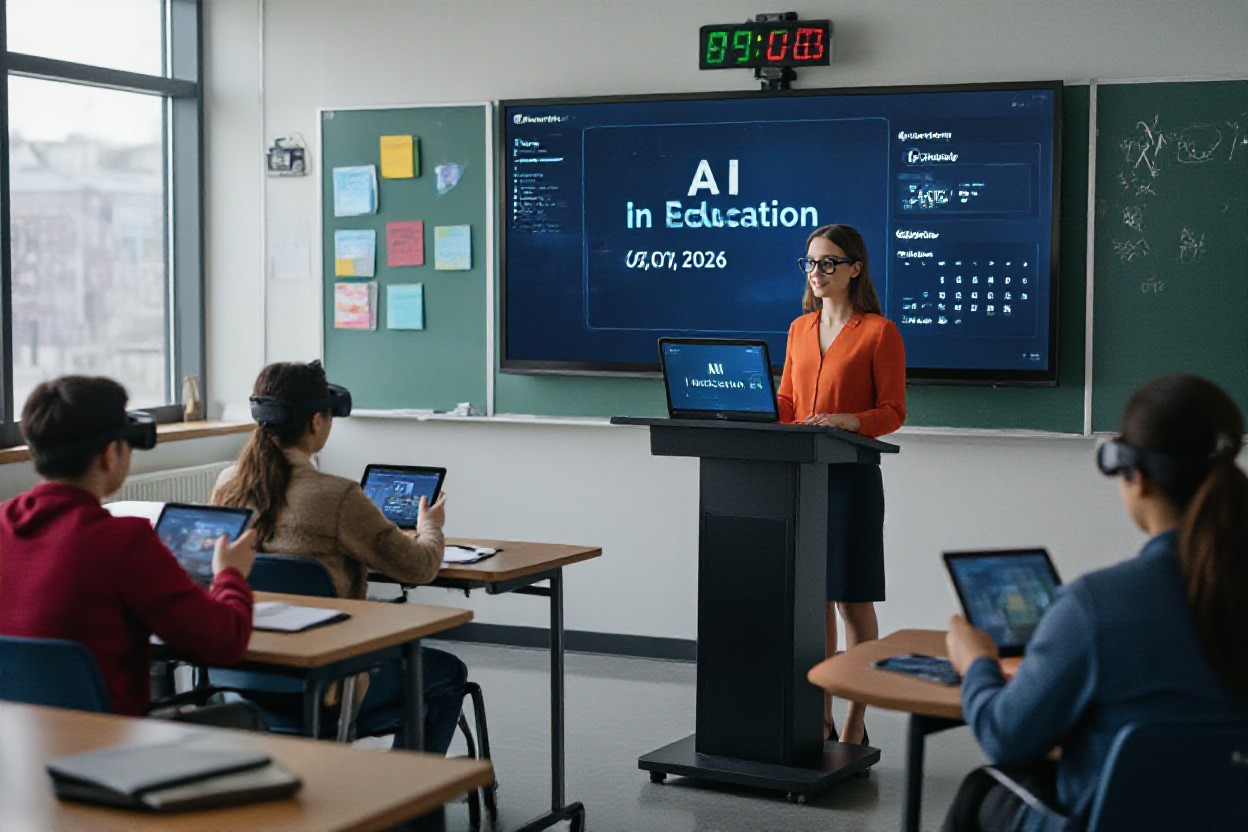
You’re seeing AI reshape classrooms by linking content creation, device ecosystems, and health-aware tools: Gmail’s Gemini inbox features free up teacher time, Lenovo’s Kira/QIRA syncs lessons across phones and laptops, and Lightrix’s LTX2 lets you generate lesson videos locally on NVIDIA GPUs to protect IP-while NVIDIA’s Rubin/Vera push hints at on-prem compute options for districts that want to host models without cloud dependence.
AI-Powered Learning Platforms
Adaptive platforms now use large models to tailor practice problems, feedback, and pacing to each student; you can deploy on-device inference via Lenovo’s cross-device assistant or run local LTX2 video generation for multimedia lessons, and leverage Gmail/Gemini to automate communications, summaries, and grading prompts so your workflows scale without rebuilding models from scratch.
Challenges in Implementing AI in Schools
You face data-privacy, budget, and vendor-lock risks: ChatGPT Health’s ability to connect records illustrates potential exposure of sensitive data, while Lenovo’s ecosystem strategy can tie your district to specific hardware and cloud partners; supply bottlenecks like Meta’s device delays also show deployment timelines can slip despite vendor promises.
Operationally, you must plan for compliance (FERPA), staff training, and maintenance: choose models like LTX2 for local hosting to reduce cloud data flow, budget for infrastructure if you aim to leverage Rubin/Vera-class on-prem compute, and insist on open standards to avoid long-term lock-in and preserve interoperability across your LMS and device fleet.
Trends and Predictions for 2026
Compute scale and consumer integration will dominate 2026: NVIDIA’s Rubin GPUs and Vera CPUs aim to expand data-center throughput while OpenAI integrations push AI into cars and health tools. You’ll see ChatGPT Health beta connecting records and fitness apps, Gmail’s Gemini features arriving in inbox and TV experiences, and Lightrix LTX2 enabling local text-to-video on NVIDIA GPUs. Lenovo’s Kira/QIRA signals tighter device ecosystems as vendors mirror Apple-style lock-in to deliver seamless, cross-device AI workflows.
Future AI Applications
In health, you can use ChatGPT Health beta to aggregate medical records, interpret lab results, and prepare questions for doctor visits; in mobility, automakers will adopt NVIDIA’s open reasoning model to accelerate ADAS and autonomy without in-house model builds; creators will run LTX2 locally for privacy-preserving text-to-video on NVIDIA cards; and your productivity will improve as Lenovo’s Kira/QIRA syncs prompts and context across Motorola phones and Lenovo laptops.
Anticipated Challenges in AI Adoption
Hardware and supply constraints will bite: Meta delayed smart‑glasses international rollout from high demand and limited inventory, and NVIDIA’s infrastructure push underscores heavy capital needed for Rubin/Vera‑class deployments. You’ll encounter ecosystem lock-in when vendors like Lenovo tie features to their hardware, face tighter regulation around ChatGPT Health’s medical data links, and contend with IP and misuse risks even as LTX2 enables local generation.
Beyond hardware, certification and liability will slow vehicle rollouts-automakers integrating NVIDIA’s open vehicle model must meet safety standards and validate millions of miles of behavior; data governance will force explicit consent, audit trails, and stricter HIPAA‑style controls for health integrations; and your teams will need skills and budget to manage hybrid on‑device/cloud stacks and rising GPU/cloud costs.
To wrap up
Presently you face a rapidly shifting AI landscape: OpenAI’s ChatGPT Health brings medical integrations, NVIDIA scales compute with Rubin and Vera plus vehicle reasoning models, Lenovo/Motorola unify devices with Kira/QIRA while nudging ecosystem lock-in, open Lightrix LTX2 enables local video generation, Google deploys Gemini across Gmail and TV, and Meta’s glasses and leadership turbulence create supply and governance risks to inform your strategy.