
Folks, you’re seeing Microsoft’s reinvention usher in a copilot era where agents perform tasks and embed AI into your daily workflows; Mustafa Suleyman shifts focus from AGI ideals to measurable “artificial capable intelligence,” arguing progress won’t stall at a training wall thanks to synthetic data, efficient models and specialization. Hallucinations can be harnessed, models gain control and citations, and tool orchestration becomes the meta-capability that transforms work, spawns new roles, and fuels a ferociously competitive startup landscape as agents learn to plan, click, book and act for you.
The Evolution of Microsoft’s Strategy
You see Microsoft repeatedly reinvent itself for each tech wave, a adaptability that drew Mustafa Suleyman from DeepMind and Inflection and now drives its embrace of the “copilot era” of agentic AI. The company is shifting toward practical, workflow-first deployments where tool use, orchestration and autonomous agents define progress, reframing AGI as “artificial capable intelligence” measured by concrete actions, retrieval and tool handling.
Implications for Everyday AI Usage
You will experience AI becoming as integral as smartphones or the internet: Co-pilot vision and agents will predict context, cite sources and perform tasks—planning, clicking, booking and operating software for you. The feared “AI training wall” is losing traction due to synthetic data, model efficiency and smaller specialist models, and controlled hallucinations can add creative value as models grow more grounded and controllable.
For your daily work this means role transformation rather than outright replacement: new jobs and hybrid roles will emerge while startups race to exploit falling barriers, so your leverage will come from adopting fast, well-integrated agents that boost productivity. Focus for oversight should be measurable capabilities—tool safety, retrieval accuracy, citation grounding and controllability—so you can trust which tasks to delegate and when to keep human judgment in the loop.
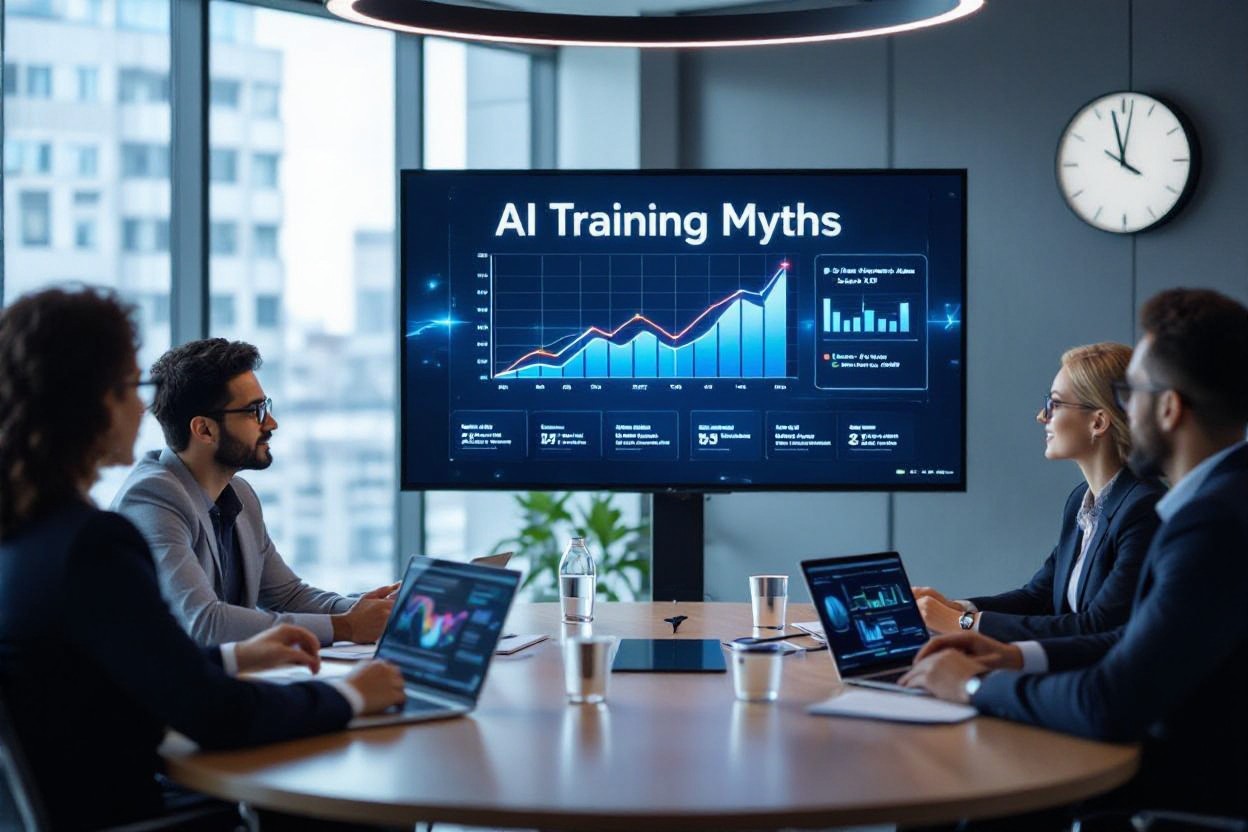
You’re seeing AI shift from grand AGI debates to practical tools that change your workflows; Mustafa Suleyman points to Microsoft’s adaptability and agentic “copilot era” in a recent video interview (https://youtu.be/BnXDMET-b74), arguing that synthetic data, model efficiency and smaller specialized models keep progress moving.
Innovations in Synthetic Data and Model Efficiency
If you worry about hitting an “AI training wall,” you can relax: Mustafa says synthetic data and efficiency gains defuse limits, letting models improve without endless raw crawl data or exponential compute—so your tools get better through smarter data generation and leaner architectures that lower cost and speed up iteration.
The Role of Specialized Models in Accelerating Progress
You’ll benefit as specialized, smaller models and better orchestration let AI perform targeted tasks faster and cheaper; Suleyman frames AGI as “artificial capable intelligence,” measurable by actions and tool use, meaning your apps will gain agency—planning, clicking and executing—without needing one massive general model.
In practice, you should expect ecosystems where niche models handle vision, retrieval, planning and tool use, then orchestrators chain them into reliable agents; this meta-capability—coordination of many compact models—keeps startups competitive, lets your product ship faster, and turns hallucinations into controllable creativity with grounding and citations as models mature.
The Dual Nature of Hallucinations in AI Systems
You should treat hallucinations as both a liability and a source of creativity: Mustafa Suleyman frames them not merely as bugs but as emergent behaviours that can inspire novel solutions, while also producing false or misleading outputs that harm trust. As agentic “copilot” systems become integral to your workflows, managing when a model invents versus when it must be factual becomes a design and safety priority.
Improvements in Controllability and Citation Practices
You’re seeing models become more controllable and better at grounding claims with citations, driven by retrieval, tool use and orchestration. This shift—from AGI ideals to practical “artificial capable intelligence”—means the AI you rely on will increasingly offer traceable sources and explicit actions, helping you validate outputs as agents move from passive apps to autonomous helpers.
To make these improvements useful to you, developers are combining retrieval-augmented generation, source attribution, and tool orchestration so models can fetch evidence, link claims to verifiable documents, and log actions for audit. Synthetic data, model efficiency and smaller specialist models keep progress fast, enabling fine-grained controls (temperature, action limits, provenance tags) that let you tune creativity versus fidelity. In the copilot era Suleyman describes, robust citation practices and controllability are what let agents plan, click, book and act in your workflows while giving you the means to verify and manage their behaviour.
The Emergence of Artificial Capable Intelligence
You see Microsoft’s reinvention into the “copilot era” as Mustafa—formerly of DeepMind and Inflection—shifts emphasis from AGI ideals to usable, measurable systems. Artificial capable intelligence values actions: tool use, retrieval, planning and autonomous clicks. The feared “AI training wall” is fading thanks to synthetic data, model efficiency and smaller specialist models, and agents that predict, contextualize and act are turning AI from passive apps into active assistants that reshape your workflows and how startups compete.
Evaluating AI Through Practical Applications and Metrics
You should assess AI by measurable impact: task completion, tool orchestration, retrieval accuracy, latency and citation fidelity rather than abstract intelligence labels. Track controllability and the creative utility of hallucinations when they can be bounded and audited. As co-pilot vision and agentic features mature, practical benchmarks reveal whether a model genuinely improves your daily work or only dazzles in demos.
To evaluate these systems in practice, run task-specific benchmarks and live A/B tests that record end-to-end outcomes: completion rate, time saved, successful tool invocations, and percentage of claims backed by verifiable sources. Log hallucination frequency alongside corrective-prompt compliance to gauge controllability, and measure orchestration reliability when chaining tools. Use synthetic data and smaller specialised models to iterate cheaply and counter the so-called training wall. For product teams and users, focus on concrete gains—speed, task success and reliable tool use—because they determine real-world value in this most explosive, competitive phase for AI innovation.
Anticipating New Job Roles in an AI Landscape
As AI moves into the “copilot era” and agents begin to plan, click and book, you should expect entirely new roles—agent designers, AI workflow integrators, model-grounding specialists and tool-orchestration engineers—to appear. Microsoft’s reinvention under Mustafa shows practical AI will embed in daily workflows like smartphones; synthetic data and model efficiency mean progress won’t stall. Your value will be measured by how you combine domain expertise with orchestration and actionable AI capabilities.
Embracing Change: The Importance of Adaptation
You must adapt by learning to orchestrate models, use synthetic data and manage hallucinations as potentially creative features. Mustafa reframes AGI as “artificial capable intelligence”, so you can focus on measurable actions, tool use and retrieval. With startups in the most explosive competitive window and barriers to creation collapsing, your edge will be speed, creativity and delivering clear consumer value rather than clinging to traditional moats.
As Microsoft’s evolution illustrates, you’ll win by shifting from abstract superintelligence debates to building measurable capabilities: designing agents that act, grounding outputs with citations, and prioritizing model efficiency and specialization. The so‑called “AI training wall” is a myth—synthetic data, model efficiency and smaller specialist models keep progress accelerating—so your role will demand constant upskilling in data engineering, prompt design, tool orchestration and evaluation. Treat hallucinations as tunable behaviors you can harness with retrieval and grounding, integrate co‑pilot vision and action into workflows, and measure success by what your agents actually do for users.
Conclusion
As a reminder, you should see September’s AI developments as a shift toward agentic AI where Microsoft’s adaptability and copilot-era tools make AI part of your daily workflow. Progress won’t stall at a training wall; synthetic data, efficient models and tool orchestration keep capability growth steady. Hallucinations can be harnessed creatively while grounding and citations improve reliability. Jobs and startups will be reshaped by speed and action-oriented agents that plan, click and operate on your behalf—adaptation and capability management matter more than abstract debates about superintelligence.